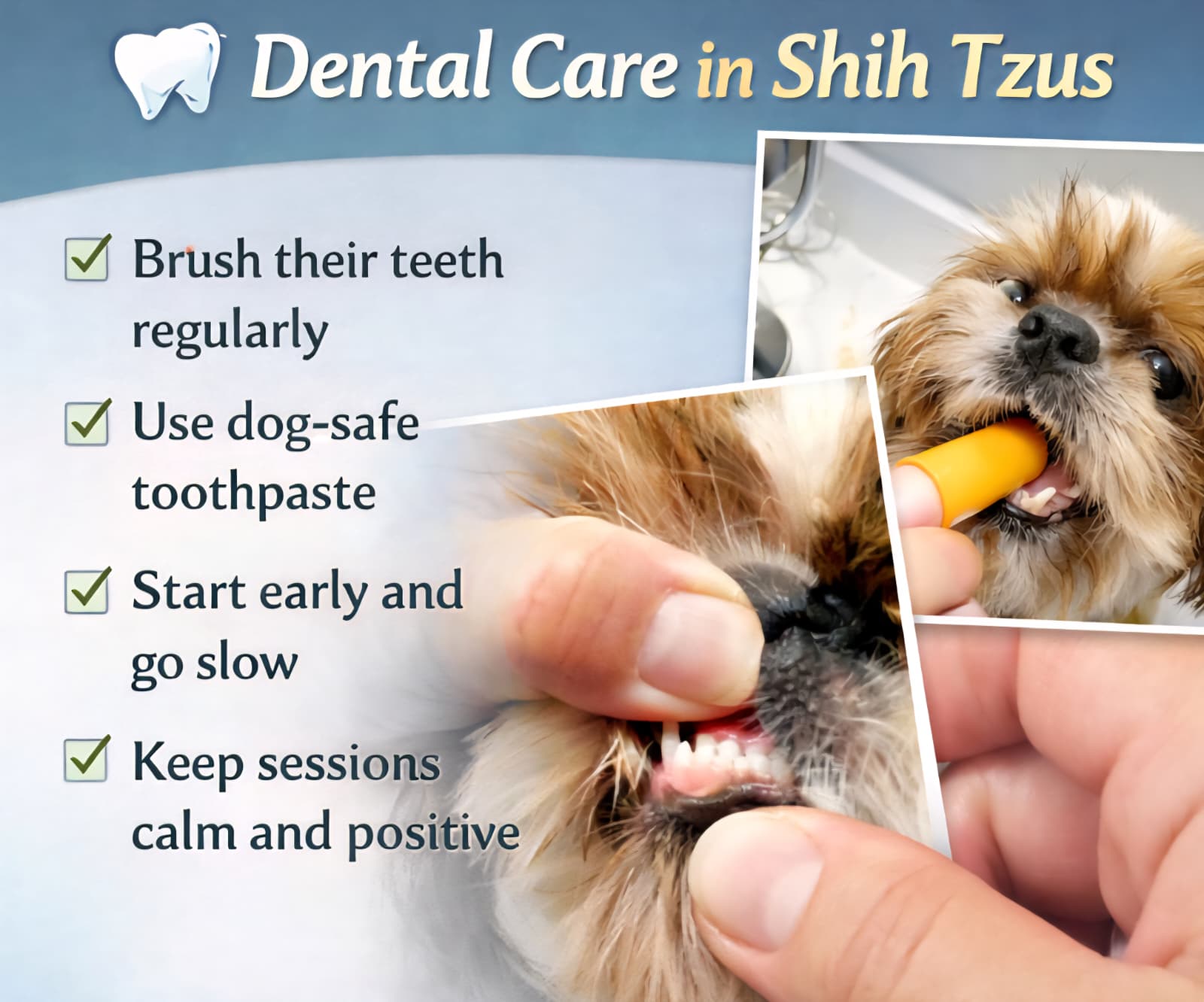
Dental disease is the most common health problem in Shih Tzus – and one of the most overlooked. By age three, over 80% of Shih Tzus show signs of periodontal disease. As a breeder at Delasa Forever Shih Tzu with over 10 years of experience serving families across the USA and Canada, I've seen the devastating effects of neglected dental health: tooth loss, painful abscesses, organ damage, and shortened lifespans. The good news? Dental disease is largely preventable. This guide will teach you everything you need to know about keeping your Shih Tzu's teeth healthy.
⚠️ Critical Fact: Dental disease doesn't just affect your Shih Tzu's mouth. Bacteria from infected gums can enter the bloodstream and damage the heart, liver, and kidneys. Good dental care adds years to your dog's life.
Why Shih Tzus Are Prone to Dental Problems
Shih Tzus have several anatomical features that make them highly susceptible to dental disease:
- Crowded teeth: Their small mouths contain a full set of 42 teeth, leading to overcrowding, misalignment, and food traps.
- Underbites (undershot jaws): The breed standard includes a slight underbite, which affects how teeth align.
- Retained baby teeth: Puppy teeth often don't fall out naturally, creating double rows that trap debris.
- Deep gum pockets: Prone to periodontal pockets that collect bacteria.
Signs of Dental Problems in Shih Tzus
Don't wait until your Shih Tzu shows obvious signs of mouth pain. Regular at-home checks and annual professional exams are essential. Look for:
- Bad breath: Not normal "dog breath" – foul odor indicates infection
- Yellow or brown tartar: Buildup on teeth, especially molars
- Red, swollen, or bleeding gums: Signs of gingivitis
- Loose or missing teeth: Advanced periodontal disease
- Difficulty eating: Dropping food, chewing on one side, reluctance to eat hard food
- Pawing at the mouth: Indicates pain
- Facial swelling: Under the eyes or along the jaw – possible tooth root abscess (emergency)
Step-by-Step: How to Brush Your Shih Tzu's Teeth
Daily tooth brushing is the gold standard for preventing dental disease. Here's how to do it correctly:
Step 1: Gather Supplies
- Dog-specific toothpaste: Never use human toothpaste (contains xylitol or fluoride, both toxic to dogs). Enzymatic dog toothpaste is ideal.
- Soft-bristled toothbrush: Dog toothbrush, child's soft toothbrush, or finger brush.
- Gauze squares: Alternative to brushes for starting out.
Step 2: Get Your Shih Tzu Comfortable
Start slowly over several days or weeks. Let your dog lick toothpaste off your finger. Then let them lick from the toothbrush. Once comfortable, lift their lip to touch teeth with your finger. Pair every step with treats and praise.
Step 3: The Brushing Technique
Hold the brush at a 45-degree angle to the gum line. Use small circular motions on the outside surfaces of teeth (the inside surfaces get cleaned by the tongue). Focus on the canine teeth and molars – this is where most tartar accumulates. Brush for 30-60 seconds total.
Step 4: Establish a Routine
Brush at the same time each day – many owners do it as part of their bedtime routine. Consistency is more important than duration. Even a quick 30-second brush is better than no brush.
Alternatives to Brushing (When You Can't Brush)
While brushing is best, some Shih Tzus never accept it. Alternatives include:
- Dental wipes: Rub over teeth and gums – less effective than brushing but better than nothing
- Dental chews: Look for VOHC (Veterinary Oral Health Council) approved products
- Dental water additives: Added to drinking water to reduce plaque
- Dental diets: Prescription kibble with larger, fibrous pieces that scrub teeth
- Dental toys: Nylon bones or rubber toys with nubs
Professional Dental Cleanings Under Anesthesia
Even with perfect home care, most Shih Tzus need professional dental cleanings under anesthesia every 12-24 months.
Why Anesthesia is Necessary
Non-anesthetic "cleanings" are cosmetic only – they cannot clean below the gum line, where periodontal disease lives. Proper cleaning requires:
- Scaling above and below the gum line
- Polishing to smooth microscopic scratches (which trap bacteria)
- Dental X-rays to detect problems below the surface
- Tooth extractions if needed (your dog will be pain-free during and after)
What to Expect During a Professional Dental Cleaning
- Pre-anesthetic blood work (to ensure liver/kidney function)
- IV catheter and fluids (supports blood pressure during anesthesia)
- General anesthesia with intubation (breathing tube)
- Dental X-rays
- Scaling above and below gum line
- Polishing
- Fluoride or sealant application
- Tooth extractions if necessary
Cost range: $500-$1,500 depending on location, whether extractions are needed, and if specialist dentists are used.
Retained Baby Teeth: What Shih Tzu Owners Need to Know
Shih Tzu puppies often retain their baby teeth (deciduous teeth) – meaning the adult tooth comes in beside the baby tooth instead of pushing it out. This creates double rows that trap food and bacteria, accelerating dental disease. If your puppy still has baby teeth at 6-7 months, ask your vet about extraction. Retained teeth are typically removed during spay/neuter surgery, adding minimal cost and recovery time.
Dental Diet and Chews for Shih Tzus
What your Shih Tzu eats affects their dental health:
- Dry kibble is better than wet food: The abrasive action of crunching kibble helps clean teeth
- Avoid soft, sticky treats: They cling to teeth and promote decay
- VOHC-approved products: Look for the Veterinary Oral Health Council seal on chews, water additives, and foods
- Raw bones: Controversial – can cause tooth fractures and bacterial infections. Most vets advise against them for small breeds.
Dental Disease and Systemic Health
The link between dental disease and overall health is well-documented in veterinary medicine. Bacteria from infected gums can:
- Damage heart valves: Leading to endocarditis and heart failure
- Stress the liver: The liver works overtime to filter bacterial toxins
- Damage kidneys: Chronic inflammation affects kidney function
- Complicate diabetes management: Infection raises blood sugar
Investing in dental care is investing in your Shih Tzu's entire body.
Dental Care for Senior Shih Tzus
Older Shih Tzus often need more frequent dental care. Anesthesia risks increase with age, but so do dental problems. Many vets perform dentals on healthy seniors using adjusted anesthesia protocols. Don't skip dental care because of age – poor dental health dramatically reduces quality of life in seniors.
Find Your Healthy Shih Tzu Puppy
At Delasa Forever Shih Tzu, we start good dental habits early, handling our puppies' mouths daily so they're accustomed to brushing. View our available Shih Tzu puppies for sale or contact Carolina for dental care advice for your new puppy.
Conclusion: Small Effort, Big Reward
Daily tooth brushing takes two minutes. Professional cleanings happen once or twice a year. The reward? A Shih Tzu who keeps their teeth for life, avoids painful dental disease, and lives longer, healthier years by your side. Start today – your Shih Tzu's future self will thank you.